
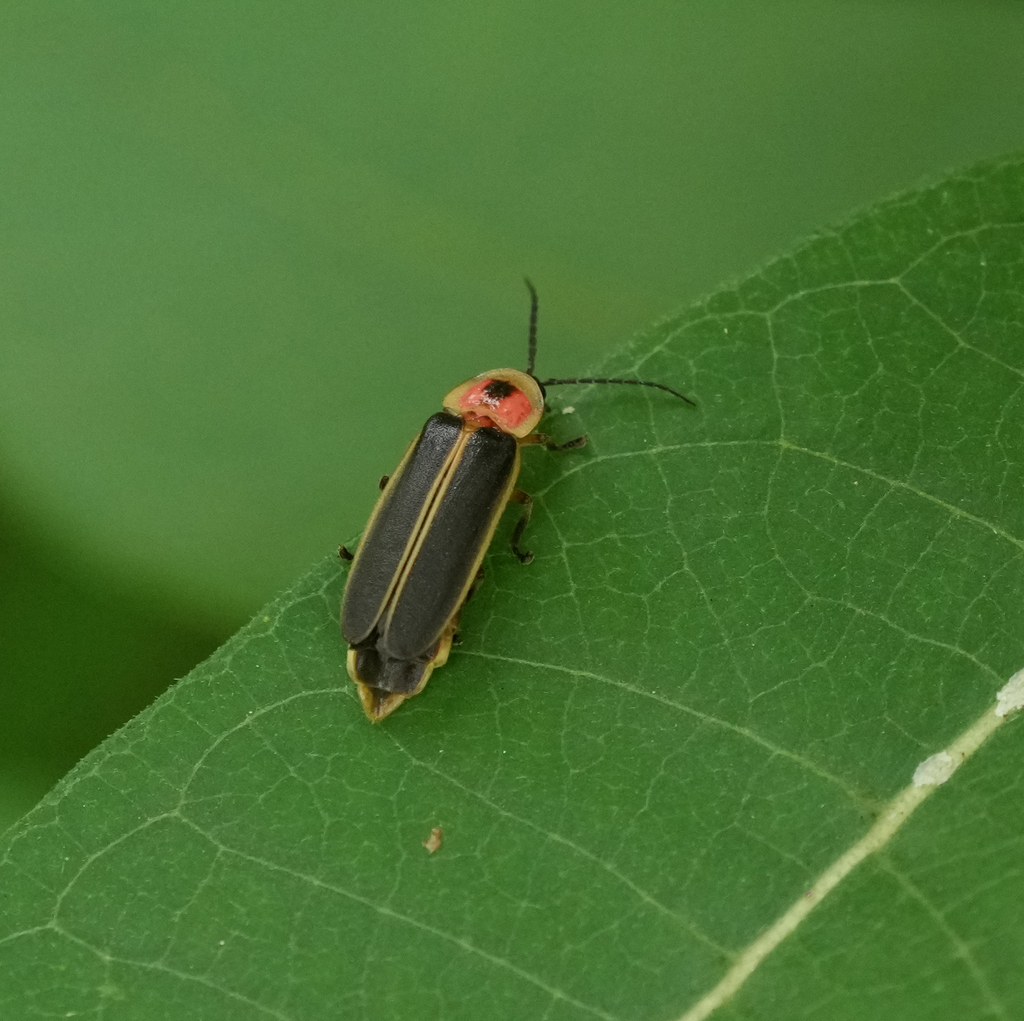
Step outside on a warm July evening just as the sun goes down. The sky turns soft purple and orange. If you look down near the grass, you might see a warm yellow spark. It flies downward, curves up, and turns off. It looks just like a glowing letter J floating in the air.
You are watching the Common Eastern Firefly. Its scientific name is Photinus pyralis. Many people also call it the Big Dipper firefly because of the way it dips down and scoops up while flashing.
Right now, on our Alitaptap map, this firefly is popping up everywhere across North America. People are spotting them in backyards, city parks, and quiet country lanes. Let us look closely at this common bug, how to spot its light signal, and what its presence tells us about the ground beneath our feet.
Spotting the Big Dipper
The Common Eastern Firefly is one of the easiest fireflies to identify. You do not even need to catch one to know what it is. You just need to watch how it flies and flashes.
When dusk begins, male fireflies take to the air. They usually fly low to the ground. You will see them hovering just above the grass blades, usually between knee height and waist height.
As the male flies, he turns on his light organ. He drops down slightly, sweeps forward, and rises back up. This motion draws a bright J shape in the dark air. The flash lasts for about one full second. Then his light goes dark. He flies forward silently in the dark for about six seconds. Then he does it again. Swoop down, curve up, flash!
The light is a warm yellow-green color. It looks a bit like the light from a bright neon glowstick or a tiny LED bulb.
Why does he make a J shape? He is sending a message. Each firefly species has its own special light pattern. Some species flash fast pulses. Some flash double blinks. The Common Eastern Firefly uses the swooping J shape. It is his way of saying that he is a male Common Eastern Firefly looking for a mate.
The Secret Language of Light
While the males fly around drawing glowing letters in the air, the female fireflies stay down low. Females usually sit on tall blades of grass, low leaves, or fence posts.
A female sits quietly and watches the sky. She looks for that special swooping J flash. If she sees a male whose signal she likes, she waits about two seconds. Then she sends back a short, simple flash from her spot in the grass. Her flash says that she is right there.
The male sees her answer. He turns toward her and flashes again. She answers again. They talk back and forth with pulses of light until he lands right next to her.
How do these little beetles produce light without getting hot? If you touch a regular lightbulb in your house, it gets warm. That is because it wastes energy as heat. Fireflies use a process called bioluminescence. That is a big word that simply means living light.
Inside the firefly's belly is a special light organ. The firefly mixes chemicals together inside this organ. One main chemical is named luciferin. When the firefly adds oxygen from the air, a chemical reaction happens. Almost all of the energy turns into pure light, with almost no heat at all. It is cold light. If a firefly got as hot as a household lightbulb, it could not survive.
Where Spotters Are Finding Them Right Now
If you look at the Alitaptap community map this week, you will see a huge wave of Common Eastern Firefly sightings. This species is very common across the eastern and central parts of North America.
In Maryland, spotters have reported them near Beauchamp Road in Berlin, along Queensguard Road in Silver Spring, and across Calvert County. Spotters in Wisconsin saw them on South 51st Street in Greenfield and up in Neenah.
Over in Ohio, people logged sightings in Sagamore Hills Township and along Porter Creek Road in Bay Village. Down south in North Carolina, sightings came in from Burlington, Boone, and Lake Crabtree Park in Morrisville. Farther west, spotters saw them on Hoot Owl Trail in McKinney, Texas, and on Lincoln Street in Evanston, Illinois. Spotters even reported them in quiet towns in Kansas, Indiana, Pennsylvania, and Michigan.
Notice something interesting about those places? Some are grassy parks in big suburbs. Some are backyards in small towns. One sighting was even right along Driggs Avenue in New York City!
Common Eastern Fireflies are tough little insects. They do not need deep, untouched wilderness to live. They can survive in neighborhoods, city parks, and yards. But they still need a few basic things to stay healthy.
From Underground Hunter to Summer Flyer
When you see a firefly flashing in July, you are looking at the very end of its life. Most of a firefly's life happens hidden away in the dark soil.
Female fireflies lay their tiny eggs in damp soil, moss, or under rotting wood. After a few weeks, the eggs hatch into larvae. A single young firefly is called a larva.
The larva does not look like a beetle yet. It looks a bit like a tiny armored caterpillar or a flat, dark beetle grub. Firefly larvae are sometimes called glowworms because many of them can glow faintly in the dark, too.
The larva lives in the soil and under dead leaves for one to two full years. That is a long time for a tiny bug. During all those months, the larva is a hungry hunter.
What does a firefly larva eat? It does not eat plants or flowers. It eats soft creatures that live in the dirt. Its favorite meals are earthworms, snails, and slugs.
When a larva finds a snail or slug, it bites it. The larva injects a special liquid that numbs the prey and turns its inside tissues into a soft liquid. Then the larva slurps up its meal. This makes firefly larvae great helpers for gardens, because they eat pests like garden slugs!
After spending a year or two feeding underground, the larva builds a small chamber in the dirt. It turns into a pupa, which is a resting stage like a butterfly's cocoon. Inside the pupa, its body changes completely. It grows wings, long legs, big eyes, and a flying light organ.
Finally, in early summer, the adult beetle crawls out of the ground. It climbs up a grass stem, expands its wings, and flies into the night. As an adult, it only lives for about two to four weeks. Its main job as an adult is to find a mate and lay eggs for the next generation.
What Their Presence Tells Us About the Neighborhood
Because fireflies spend so much time in the soil, seeing Common Eastern Fireflies in your yard tells you important things about your local environment. Scientists call them indicator species. That means their presence gives us clues about how healthy the land is.
First, fireflies tell us that the soil is moist. Firefly eggs and larvae cannot dry out. If the dirt gets as dry as dust and stays that way, young fireflies perish. Moist soil with fallen leaves keeps larvae safe and cool.
Second, fireflies tell us that the soil ecosystem is alive. If a yard has lots of earthworms, snails, and tiny soil bugs, the firefly larvae have plenty of food. Healthy soil full of decaying leaves creates a rich habitat for all these small creatures.
Third, fireflies tell us that the night is dark enough. Male fireflies use light to signal females. If bright streetlights, porch lights, or floodlights shine across a lawn, the females cannot see the male's glowing J pattern. Extra light confuses them and breaks their light language. When you see fireflies flashing, it means the area is dark enough for them to communicate.
Fourth, fireflies tell us that the lawn is safe from harsh chemicals. Lawn sprays meant to kill grubs or weeds can also harm firefly larvae living underground. A yard with fireflies is usually a yard with fewer harsh chemical sprays.
Simple Ways to Welcome Fireflies to Your Lawn
You do not need a giant farm or a nature reserve to help Common Eastern Fireflies. You can turn your own backyard or school garden into a firefly haven with a few simple steps.
Turn off outside lights at night. Flip off porch lights and close your window blinds after dark. Dark yards help fireflies see each other easily.
Leave a spot for fallen leaves. In the autumn, keep a small corner of your yard covered with leaf litter or wood chips. This gives larvae a damp, cozy place to hunt and hibernate through the winter.
Let some grass grow taller. Female fireflies need tall grass blades or low plant stems to perch on while watching for males. Mowing your lawn a little higher or leaving a small unmowed patch gives them safe perches.
Avoid spraying chemical lawn treatments. Chemicals aimed at soil pests can hurt firefly larvae, too.
Finally, keep your eyes open! When you spot a firefly swooping in a J shape this summer, grab a notebook or ask an adult to help you log it on Alitaptap. Every sighting you submit helps us map where these glowing beetles are thriving and where they need our help.